
Cream marble
Katrina Marble
Also sold as Katrina Beige · Catherina
Cream ground carrying visible shell and fossil figure.
Get a quote on Katrina — WhatsApp
We reply within one working day · Saturday – Thursday, 08:00 – 18:00 Cairo time · WhatsApp +20 106 926 2572
Family business since 1991 · Factory in Alexandria · 50 % in advance · 30 % on approval after production · 20 % before shipping · Reply within one working day
Drag the slab to turn it, or use the arrow keys. Switching finish re-renders the surface — polished throws a hard specular, the abraded finishes open the surface up and knock the colour back.
Katrina is a fossiliferous cream. The ground is broken by pale shell sections and small circular fossils that take the light at a different angle from the matrix around them, so the surface shifts as you move past it instead of sitting flat. That figure is the reason to specify it, and it is also what has to be allowed for at order stage: the shell sections are voids, so slabs are filled before they are polished. Brushed and left unfilled, the same face becomes a rough, almost archaeological surface with the fossils standing proud of the ground. How much fossil a slab carries is decided by the block rather than by the finish, which is why availability is medium and block-dependent — one block can come out lightly speckled and the next crowded. Feature walls, cladding, reception areas and bar fronts are where it earns its keep, though it does go down on an interior floor.
Sinai Pearl comes off the same peninsula and sits in the same cream family, but it is the quiet one — soft clouding, no shell. If the fossil figure is what drew you to Katrina, nothing else in the range substitutes for it; if you want the cream ground without the interruption, Sinai Pearl is the stone.
- Material
- Marble
- Colour
- Cream
- Origin
- Sinai Peninsula
- Availability
- Medium — block-dependent
- Finishes
- Polished, Honed, Brushed, Antique / aged
- Formats
- Blocks, Gangsaw slabs, Tiles, Cut-to-size
Send your finish and thickness on WhatsApp Request a quote for Katrina Request a sample
Samples are 10 × 10 cm as standard and go out by courier.
Photographs
Katrina in the yard
We are photographing this material now. Until the shoot is done, the turning slab and the close-up below are renderings, and the honest answer to “what does it actually look like” is a sample in your hand.
No photographs yet. Ask us for the current slab and block photographs of Katrina — we shoot them on request, in the yard, with a scale in frame. A cut sample goes out by courier the same week.
Laid out
Katrina across a floor
A photograph shows one slab on a stand. This shows the stone tile after tile — where the pattern repeats, how far the tone drifts across a batch, and what the joint does to it. Every tile here is cut from a different part of the surface, the way material comes out of a real crate.
Indicative layout. Tone drift is deliberate — no two tiles from one batch match exactly, and a laid floor should never look like one photograph repeated.
In the room
Katrina against your wall colour
Nobody buys stone on a white background. Put Katrina on the floor, up the wall or across a worktop, set the colour it will actually sit against, and change the light — the same three questions every client asks on a site visit, answered before the sample ships.
A scene, not a render of your project: proportions are indicative and colour on a screen is never the colour in a room. Send us the drawings and we will lay the real slab sizes out against your setting-out.
Surface
Katrina, close up
The slab above turns; this is the same stone at the size it sits in your hand. Change the finish and it re-cuts.
Roughly a 130 mm span of Katrina, polished. A rendered preview, not a photograph of stock — ask for a physical sample before you specify.
Specified for
Where Katrina is used
- Feature walls
- Wall cladding
- Interior flooring
- Reception areas
- Bar fronts
Suitability depends on the finish, the thickness and the exposure. If you are specifying for external cladding, wet areas or heavy traffic, send us the detail and we will tell you what we would put in that position.
Technical
Egyptian beige / cream marble — typical range
| Property | Typical value | Standard |
|---|---|---|
| Bulk density | 2,600 – 2,720 kg/m³ | EN 1936 |
| Water absorption | 0.10 – 0.45 % | EN 13755 |
| Compressive strength | 70 – 110 MPa | EN 1926 |
| Flexural strength | 8 – 14 MPa | EN 12372 |
| Abrasion resistance | 20 – 26 mm | EN 14157 |
| Frost resistance | Passes 48 cycles (selected stones) | EN 12371 |
| Mohs hardness | 3 – 4 | — |
| Reaction to fire | Class A1 | EN 13501-1 |
These are indicative ranges for this stone family, published so you can size a design early. They are not a test certificate. For the stone you select we arrange water absorption, flexural strength and abrasion tests at an accredited laboratory before you close a specification.
Formats
How Katrina is supplied
Blocks
Quarry blocks selected and squared. Typical 2.6 – 3.0 × 1.5 × 1.5 m, 18 – 30 tonnes. Sold by m³, loaded on flat rack or in-container with steel cradles.
Gangsaw slabs
Full-size slabs from the gangsaw. Marble typically 2.6 – 3.0 × 1.6 – 1.9 m in 2 cm and 3 cm; granite 2 cm and 3 cm. Bundled by block so vein sequence is preserved.
Tiles
Calibrated tiles in 30×30, 30×60, 40×40, 60×60, 60×120 cm and free length, 1.0 – 3.0 cm. Edges straight-cut or bevelled, back-mesh on request.
Cut-to-size
Worked to your drawings — worktops, vanity tops, cladding panels, mitres, cut-outs, drainage grooves, undermount polishing. Supplied piece-marked to a setting-out plan. How a cut-to-size order runs
Also in marble
Stones that sit alongside it
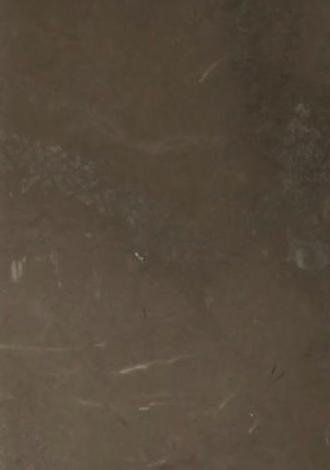 Royal Grey
Even mid-grey with a fine, calm figure — a contract floor stone.
Suez / Eastern Desert360° →
Royal Grey
Even mid-grey with a fine, calm figure — a contract floor stone.
Suez / Eastern Desert360° →
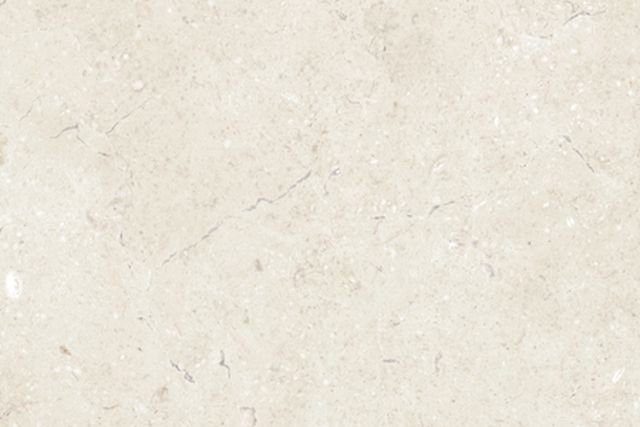 Galala Extra
The selected, lightest and most uniform grade of Galala.
Galala Mountain360° →
Galala Extra
The selected, lightest and most uniform grade of Galala.
Galala Mountain360° →
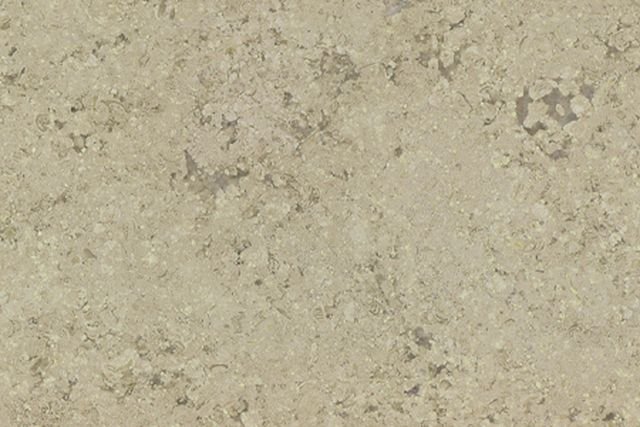 Sinai Pearl
Pearly cream with a faint grey-green cast.
Sinai Peninsula360° →
Sinai Pearl
Pearly cream with a faint grey-green cast.
Sinai Peninsula360° →
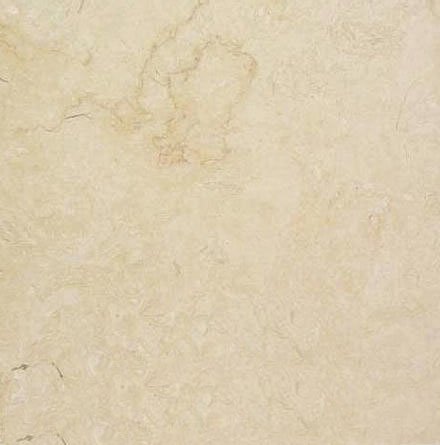 Crema Egypt
Light, low-movement cream for large calm surfaces.
Minya Governorate360° →
Crema Egypt
Light, low-movement cream for large calm surfaces.
Minya Governorate360° →
Asked about this stone
Katrina — questions buyers ask
Do the fossils leave open holes in the surface?
Yes — the shell sections are voids, which is why slabs are filled before they are polished. Left brushed and unfilled the voids stay open; that is the textural version of the stone, not a defect.
Will two Katrina slabs carry the same amount of fossil?
Not reliably. Fossil density is set by the block rather than the finish, so a matched run should be taken from a single block — give us the total area before cutting starts rather than after.
Which finish shows the fossils best?
Filled and polished, the fossils register as tone against a refined, lightly patterned cream. Brushed leaves them standing in relief, which is the version that reads as archaeological rather than decorative.
Why is it so often used on bar fronts and reception faces?
It is a stone you look at from close range, and the shell sections reward that. At eye level each fossil reads individually, which is where the pattern earns its price rather than being walked over.
Get a quote on Katrina.
Send the stone, the finish, the thickness and the destination port. You get a quote with an FOB and a CIF price, a lead time and photographs of the actual material.
We reply within one working day · Saturday – Thursday, 08:00 – 18:00 Cairo time · WhatsApp +20 106 926 2572
Family business since 1991 · Factory in Alexandria · 50 % in advance · 30 % on approval after production · 20 % before shipping · Reply within one working day