
Golden marble
Khatmeya Marble
Also sold as Khatmia · Pearly Yellow
Warm pearl-yellow ground with a soft, drifting figure.
Get a quote on Khatmeya — WhatsApp
We reply within one working day · Saturday – Thursday, 08:00 – 18:00 Cairo time · WhatsApp +20 106 926 2572
Family business since 1991 · Factory in Alexandria · 50 % in advance · 30 % on approval after production · 20 % before shipping · Reply within one working day
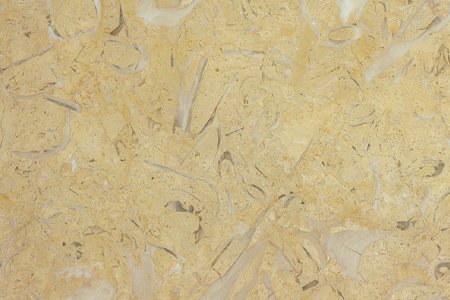
Drag the slab to turn it, or use the arrow keys. Switching finish re-renders the surface — polished throws a hard specular, the abraded finishes open the surface up and knock the colour back.
Khatmeya sits in the gap between a beige and a yellow: a warm pearly ground with pale gold clouding through it and, in some blocks, a thin brown seam. It has been worked out of the Eastern Desert for decades, and the reason it holds its place in the range is consistency. Most Egyptian yellows come out of the block variable enough that they end up on a feature panel, while Khatmeya is even enough to run a whole floor in, and block production is steady enough to match tone across deliveries. The other thing worth knowing is what honing does to it: the shine goes and the surface reads almost like a limestone, which is worth sampling if the room is a hotel lobby and a polished yellow would be too much. Polished, brushed, antique and tumbled are the alternatives, and it is supplied through to steps and sills.
Goldi comes out of the same Eastern Desert but is the deeper and more golden of the two, with fine ochre veining and continuous block production. Khatmeya is the paler, pearlier ground, and its movement is clouding rather than veins.
- Material
- Marble
- Colour
- Golden
- Origin
- Eastern Desert, Egypt
- Availability
- High — steady block production
- Finishes
- Polished, Honed, Brushed, Antique / aged, Tumbled
- Formats
- Blocks, Gangsaw slabs, Tiles, Cut-to-size, Steps and risers, Window sills and thresholds
Send your finish and thickness on WhatsApp Request a quote for Khatmeya Request a sample
Samples are 10 × 10 cm as standard and go out by courier.
Photographs
Khatmeya in the yard
Photographs of our own blocks, slabs and finished work. Slab photography shows one slab — the block it came from is what you are quoted against.
Laid out
Khatmeya across a floor
A photograph shows one slab on a stand. This shows the stone tile after tile — where the pattern repeats, how far the tone drifts across a batch, and what the joint does to it. Every tile here is cut from a different part of the surface, the way material comes out of a real crate.
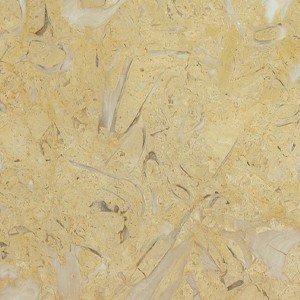
Indicative layout. Tone drift is deliberate — no two tiles from one batch match exactly, and a laid floor should never look like one photograph repeated.
In the room
Khatmeya against your wall colour
Nobody buys stone on a white background. Put Khatmeya on the floor, up the wall or across a worktop, set the colour it will actually sit against, and change the light — the same three questions every client asks on a site visit, answered before the sample ships.
A scene, not a render of your project: proportions are indicative and colour on a screen is never the colour in a room. Send us the drawings and we will lay the real slab sizes out against your setting-out.
Surface
Khatmeya, close up
The slab above turns; this is the same stone at the size it sits in your hand. Change the finish and it re-cuts.
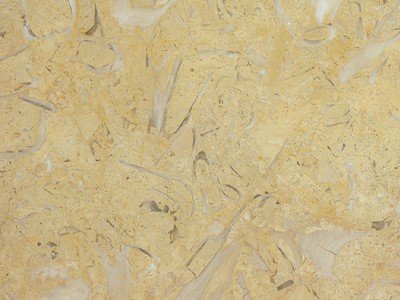
Roughly a 130 mm span of Khatmeya, polished. A rendered preview, not a photograph of stock — ask for a physical sample before you specify.
Specified for
Where Khatmeya is used
- Interior flooring
- Wall cladding
- Stairs and risers
- Hotel lobbies
- Reception desks
Suitability depends on the finish, the thickness and the exposure. If you are specifying for external cladding, wet areas or heavy traffic, send us the detail and we will tell you what we would put in that position.
Technical
Egyptian beige / cream marble — typical range
| Property | Typical value | Standard |
|---|---|---|
| Bulk density | 2,600 – 2,720 kg/m³ | EN 1936 |
| Water absorption | 0.10 – 0.45 % | EN 13755 |
| Compressive strength | 70 – 110 MPa | EN 1926 |
| Flexural strength | 8 – 14 MPa | EN 12372 |
| Abrasion resistance | 20 – 26 mm | EN 14157 |
| Frost resistance | Passes 48 cycles (selected stones) | EN 12371 |
| Mohs hardness | 3 – 4 | — |
| Reaction to fire | Class A1 | EN 13501-1 |
These are indicative ranges for this stone family, published so you can size a design early. They are not a test certificate. For the stone you select we arrange water absorption, flexural strength and abrasion tests at an accredited laboratory before you close a specification.
Formats
How Khatmeya is supplied
Blocks
Quarry blocks selected and squared. Typical 2.6 – 3.0 × 1.5 × 1.5 m, 18 – 30 tonnes. Sold by m³, loaded on flat rack or in-container with steel cradles.
Gangsaw slabs
Full-size slabs from the gangsaw. Marble typically 2.6 – 3.0 × 1.6 – 1.9 m in 2 cm and 3 cm; granite 2 cm and 3 cm. Bundled by block so vein sequence is preserved.
Tiles
Calibrated tiles in 30×30, 30×60, 40×40, 60×60, 60×120 cm and free length, 1.0 – 3.0 cm. Edges straight-cut or bevelled, back-mesh on request.
Cut-to-size
Worked to your drawings — worktops, vanity tops, cladding panels, mitres, cut-outs, drainage grooves, undermount polishing. Supplied piece-marked to a setting-out plan. How a cut-to-size order runs
Steps and risers
Treads with bullnose, half-bullnose or eased edge, anti-slip grooving on request, matched risers and stringers.
Window sills and thresholds
Sills, copings and thresholds with drip groove, polished ends and mitred returns.
Also in marble
Stones that sit alongside it
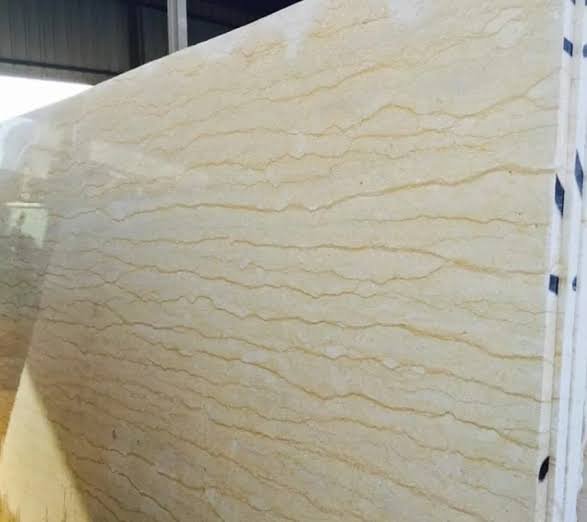 Silvia Menia
Soft neutral beige, low movement, dependable in volume.
Minya Governorate360° →
Silvia Menia
Soft neutral beige, low movement, dependable in volume.
Minya Governorate360° →
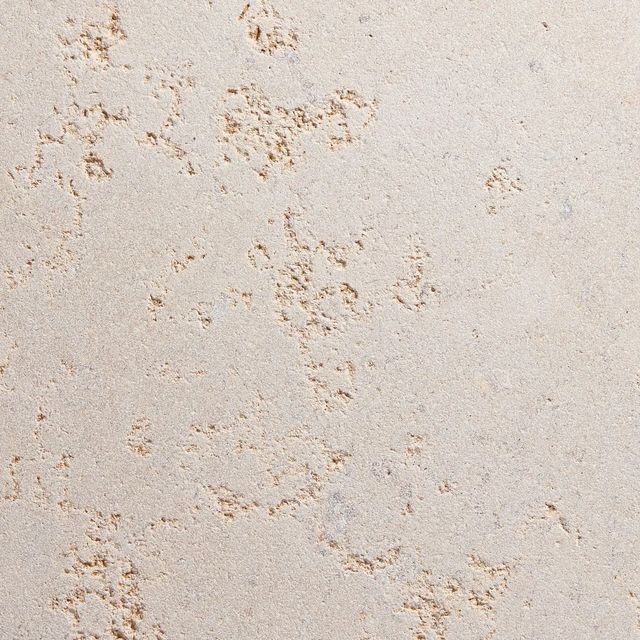 Triesta
Pale warm beige threaded with fine, quiet veining.
Suez / Eastern Desert360° →
Triesta
Pale warm beige threaded with fine, quiet veining.
Suez / Eastern Desert360° →
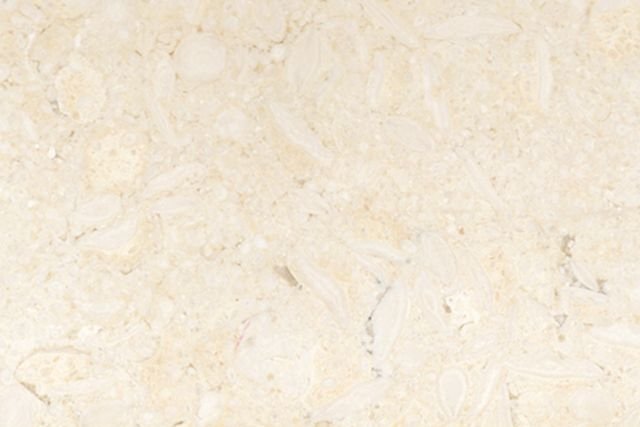 Samaha
Warm mid beige with a fine, sandy crystal.
Minya Governorate360° →
Katrina
Cream ground carrying visible shell and fossil figure.
Sinai Peninsula360° →
Samaha
Warm mid beige with a fine, sandy crystal.
Minya Governorate360° →
Katrina
Cream ground carrying visible shell and fossil figure.
Sinai Peninsula360° →
Asked about this stone
Khatmeya — questions buyers ask
Will the slabs have brown seams in them?
Some blocks carry a thin brown seam through the pearl ground. It is part of the stone rather than a fault, but if the scheme cannot take it, say so at enquiry so blocks can be selected before sawing.
Is it consistent enough for a whole floor?
That is the argument for Khatmeya among the Egyptian yellows: it comes out of the block even enough to lay across a floor rather than only on a feature panel. Production is steady, so tone can also be matched across deliveries on a phased job.
What does honing do to it?
It takes the shine off and the surface reads close to a limestone — a different thing to look at, not just a matt version of the polished slab. Ask for polished and honed samples off the same slab before deciding.
Can stairs be matched to the floor?
Steps and sills are in the format list and stairs and risers are among its uses, so treads can be cut and matched to the floor beside them. If the treads need more grip than a polish gives, honed, brushed and tumbled are all produced in this stone.
Get a quote on Khatmeya.
Send the stone, the finish, the thickness and the destination port. You get a quote with an FOB and a CIF price, a lead time and photographs of the actual material.
We reply within one working day · Saturday – Thursday, 08:00 – 18:00 Cairo time · WhatsApp +20 106 926 2572
Family business since 1991 · Factory in Alexandria · 50 % in advance · 30 % on approval after production · 20 % before shipping · Reply within one working day