
Translucent marble
Egyptian Alabaster Marble
Also sold as Luxor Alabaster · Egyptian Onyx
Translucent banded calcite — the stone of the pharaonic workshops.
Get a quote on Egyptian Alabaster — WhatsApp
We reply within one working day · Saturday – Thursday, 08:00 – 18:00 Cairo time · WhatsApp +20 106 926 2572
Family business since 1991 · Factory in Alexandria · 50 % in advance · 30 % on approval after production · 20 % before shipping · Reply within one working day
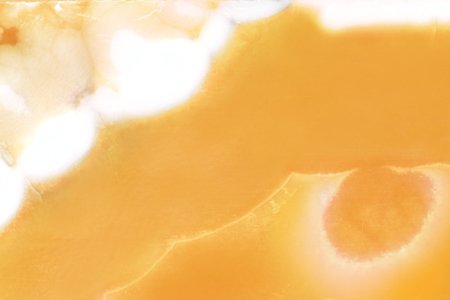
Drag the slab to turn it, or use the arrow keys. Switching finish re-renders the surface — polished throws a hard specular, the abraded finishes open the surface up and knock the colour back.
Egyptian alabaster is a banded calcite quarried at Luxor and Beni Suef, worked here for five thousand years, and it is the one material in the marble range that is not a building stone. It is the softest thing we cut, and it is translucent at 15 to 20 mm, which is the whole reason to specify it: lit from behind, a wall becomes a light fitting and the banding turns into the drawing. Unlit it reads as a warm, heavily banded honey stone, which is not what it is bought for. It will not take traffic, it will not take acid, and it does not go outside. Blocks are small, so panel size is limited by the block rather than by the saw, and a large backlit wall is a set of panels with a joint pattern that has to be designed rather than one continuous face. Polished or honed, in blocks, slabs and cut-to-size.
Nothing else in the marble range does this. Galala Classic and the other beiges are floor and facade stones with deep block supply behind them; alabaster is bought by the panel, out of small blocks, and specified by how it behaves with a light source rather than by how it wears.
- Material
- Marble
- Colour
- Translucent
- Origin
- Luxor and Beni Suef
- Availability
- Medium — small block sizes
- Finishes
- Polished, Honed
- Formats
- Blocks, Gangsaw slabs, Cut-to-size
Send your finish and thickness on WhatsApp Request a quote for Egyptian Alabaster Request a sample
Samples are 10 × 10 cm as standard and go out by courier.
Photographs
Egyptian Alabaster in the yard
Photographs of our own blocks, slabs and finished work. Slab photography shows one slab — the block it came from is what you are quoted against.
Laid out
Egyptian Alabaster across a floor
A photograph shows one slab on a stand. This shows the stone tile after tile — where the pattern repeats, how far the tone drifts across a batch, and what the joint does to it. Every tile here is cut from a different part of the surface, the way material comes out of a real crate.
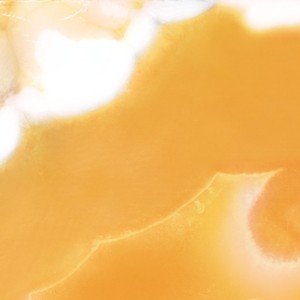
Indicative layout. Tone drift is deliberate — no two tiles from one batch match exactly, and a laid floor should never look like one photograph repeated.
In the room
Egyptian Alabaster against your wall colour
Nobody buys stone on a white background. Put Egyptian Alabaster on the floor, up the wall or across a worktop, set the colour it will actually sit against, and change the light — the same three questions every client asks on a site visit, answered before the sample ships.
A scene, not a render of your project: proportions are indicative and colour on a screen is never the colour in a room. Send us the drawings and we will lay the real slab sizes out against your setting-out.
Surface
Egyptian Alabaster, close up
The slab above turns; this is the same stone at the size it sits in your hand. Change the finish and it re-cuts.
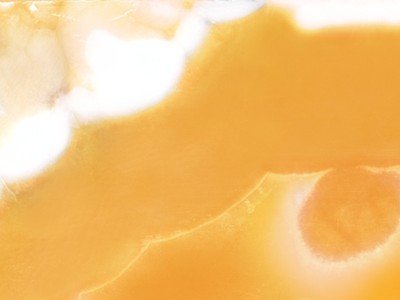
Roughly a 130 mm span of Egyptian Alabaster, polished. A rendered preview, not a photograph of stock — ask for a physical sample before you specify.
Specified for
Where Egyptian Alabaster is used
- Backlit panels
- Feature walls
- Bar fronts
- Lighting
- Decorative objects
- Reception desks
Suitability depends on the finish, the thickness and the exposure. If you are specifying for external cladding, wet areas or heavy traffic, send us the detail and we will tell you what we would put in that position.
Technical
Egyptian alabaster — typical range
| Property | Typical value | Standard |
|---|---|---|
| Bulk density | 2,300 – 2,500 kg/m³ | EN 1936 |
| Water absorption | 0.4 – 1.5 % | EN 13755 |
| Compressive strength | 40 – 70 MPa | EN 1926 |
| Flexural strength | 5 – 9 MPa | EN 12372 |
| Light transmission | Translucent at 15 – 20 mm | — |
| Mohs hardness | 2 – 3 | — |
| Not recommended for | Flooring, external use, wet acidic areas | — |
These are indicative ranges for this stone family, published so you can size a design early. They are not a test certificate. For the stone you select we arrange water absorption, flexural strength and abrasion tests at an accredited laboratory before you close a specification.
Formats
How Egyptian Alabaster is supplied
Blocks
Quarry blocks selected and squared. Typical 2.6 – 3.0 × 1.5 × 1.5 m, 18 – 30 tonnes. Sold by m³, loaded on flat rack or in-container with steel cradles.
Gangsaw slabs
Full-size slabs from the gangsaw. Marble typically 2.6 – 3.0 × 1.6 – 1.9 m in 2 cm and 3 cm; granite 2 cm and 3 cm. Bundled by block so vein sequence is preserved.
Cut-to-size
Worked to your drawings — worktops, vanity tops, cladding panels, mitres, cut-outs, drainage grooves, undermount polishing. Supplied piece-marked to a setting-out plan. How a cut-to-size order runs
Also in marble
Stones that sit alongside it
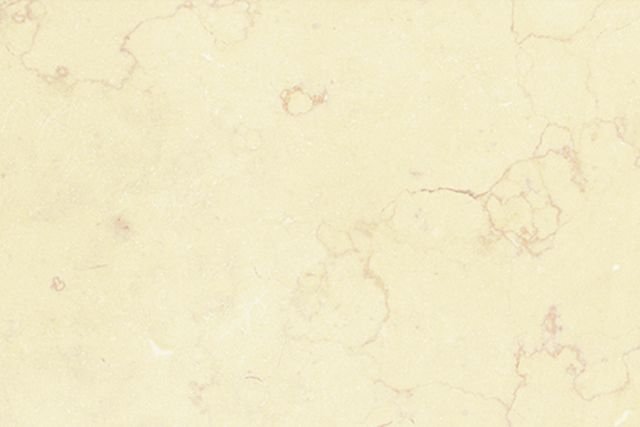 Sunny Oro Light
Oro's colour at a lighter value.
Minya Governorate360° →
Sunny Oro Light
Oro's colour at a lighter value.
Minya Governorate360° →
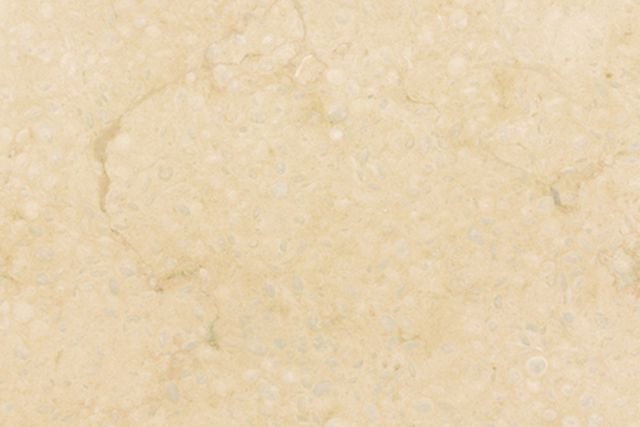 Sunny Medium
The middle grade — between Sunny Menia and Sunny Dark.
Minya Governorate360° →
Sunny Medium
The middle grade — between Sunny Menia and Sunny Dark.
Minya Governorate360° →
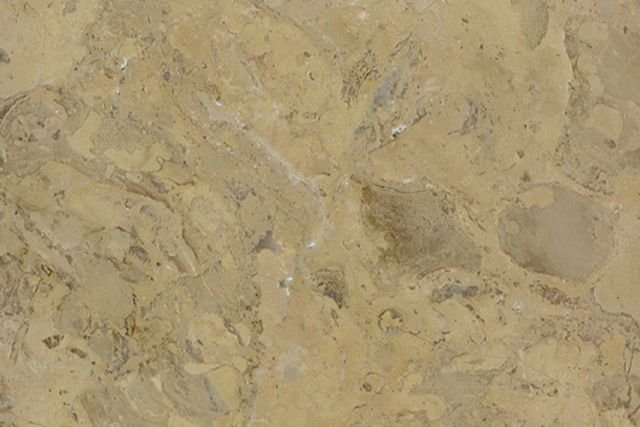 Breccia Sinai
Cream and rust fragments locked in a pale matrix.
Sinai Peninsula360° →
Breccia Sinai
Cream and rust fragments locked in a pale matrix.
Sinai Peninsula360° →
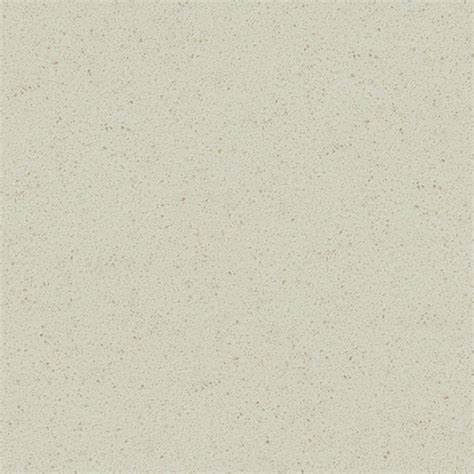 Beige Dune
Sand-toned beige with a long, drifting figure.
Eastern Desert360° →
Beige Dune
Sand-toned beige with a long, drifting figure.
Eastern Desert360° →
Asked about this stone
Egyptian Alabaster — questions buyers ask
How thick should a backlit panel be?
The published transmission range for Egyptian alabaster is 15 to 20 mm. Go thicker and less light comes through; go thinner and you are handling a very soft stone in large sheets. Send us the panel sizes and the light source and we will tell you what we would cut.
Do the panels need backing?
It is not listed as supplied resin-and-mesh backed the way our onyx is, so on alabaster treat it as a per-panel decision rather than a standard. Give us the panel size, the thickness and the fixing method and we will tell you what that slab needs.
Can it go on a bar top or a floor?
A bar front, yes — that is on the application list. A bar top or a floor, no. It will not take traffic and it will not take acid, and at Mohs 2 to 3 a spilled drink is a mark you keep.
Is this the same as the onyx in your semi-precious range?
No, and the confusion comes from the name — alabaster is also sold as Egyptian Onyx. This material is quarried in Egypt, at Luxor and Beni Suef, and cut here. The onyx and semi-precious slabs are bought in through a long-standing supply partnership, and every page in that category says so.
Get a quote on Egyptian Alabaster.
Send the stone, the finish, the thickness and the destination port. You get a quote with an FOB and a CIF price, a lead time and photographs of the actual material.
We reply within one working day · Saturday – Thursday, 08:00 – 18:00 Cairo time · WhatsApp +20 106 926 2572
Family business since 1991 · Factory in Alexandria · 50 % in advance · 30 % on approval after production · 20 % before shipping · Reply within one working day